
How to Get Court Records
Every Gogebic County case belongs to a specific court, so begin there. The 32nd Circuit Court, 98th District Court, Probate Court, and Family Division each keep their own records. The main court offices do share one building at 200 N. Moore Street in Bessemer. For public case history, MiCOURT Case Search is the online route. It helps you spot the court, the case number, and the case type. The filing date, the event history, and the next hearing show up too. Just remember what it is not. It is not a full document archive. It is not a certified record.
Need a document, an inspection, a certification, an older paper file, or an answer on a restricted record? Contact the clerk of the court named on the case. Online history makes a good starting point. The clerk counter handles inspection. A phone call gets you current fees and availability. Mail or pickup works where the clerk confirms it, and some offices answer e-mail at a record-specific address. Not every request can be finished by e-mail or the same day. Confirm the method before sending private details or driving across Gogebic County.
- Write down the court name, complete case number, party role, document title, and filed or entered date.
- Use MiCOURT to confirm the public case history when the case type is available online, then retain the court and case number shown there.
- Ask the court clerk whether the requested Gogebic record is public, sealed, redacted, on paper, electronic, or available only by transcript.
- State whether inspection, a plain copy, or a certified copy is needed, and ask about the current reproduction or certification cost before ordering.
- Use the channel the clerk confirms, such as counter inspection, mail, pickup, phone-assisted request, or an office-provided e-mail route.
Note: Name the court and the case in your request. A blanket ask for all records about a person will not get you the file.
Gogebic Court Record Routes
Michigan Court Rule 8.119 puts trial-court case records in the clerk's hands. That makes the clerk your source for the file behind any Gogebic County MiCOURT result. The same office handles certification and access questions. Which court you pick matters. A district-court file, a circuit-court file, and a probate file stay separate records. They stay separate even at the same county courthouse. Identify the court first so your request lands in the right office.
32nd Circuit Court
Gogebic County Courthouse
200 N. Moore Street
Bessemer, MI 49911
906-663-4211
98th District Court
Gogebic County Courthouse
200 N. Moore Street
Bessemer, MI 49911
906-663-4611
Gogebic Probate Court
Gogebic County Courthouse
200 N. Moore Street
Bessemer, MI 49911
906-667-0421
The official court pages list phone contacts but no universal mail deadline, walk-in policy, or same-day retrieval promise. Call the Gogebic court first. That matters most for an old file, an accommodation, or certification.
Types of Court Records
The clerk's official Gogebic County file can hold far more than the online docket history. What you can get depends on the court. It also depends on the case type and the access rule. Name the exact item you want. Never assume every paper in a file is public or ready on the spot. One case can show an event list online. Its pleadings, exhibits, transcript, or certified judgment may still need a separate clerk request.
- Case history or docket entries, including filing, hearing, order, disposition, and closing events.
- Pleadings such as complaints, answers, petitions, motions, briefs, and proofs of service.
- Orders, judgments, stipulations, garnishments, satisfaction certificates, and appeal papers.
- Probate records involving estates, guardianships, conservatorships, trusts, and protective matters, subject to their own access limits.
- Audio or transcripts, which use a separate production request rather than an ordinary document-copy request.
MiCOURT public history may show that an order or a financial event exists, but the clerk decides whether the supporting record is public, redacted, sealed, or restricted. Wills, adoption, juvenile, and mental-health files are protected categories. Their existence in Gogebic County courts does not mean you can obtain them.
Gogebic Court History and Files
Think of MiCOURT as a public case-history layer sitting on top of the real thing. The clerk maintains the official Gogebic County case record. That gap matters. Your search result may show only a headline or a date. The official file can include pleadings, signed orders, judgments, exhibits, proofs of service, recordings or transcripts, and financial paperwork. None of it appears in full online. A docket search gives you a practical lead, nothing more. It does not replace the filed document or a court-certified copy. The official Michigan Court Rule 8.119 text sets out the access and copying framework. It covers trial-court records.
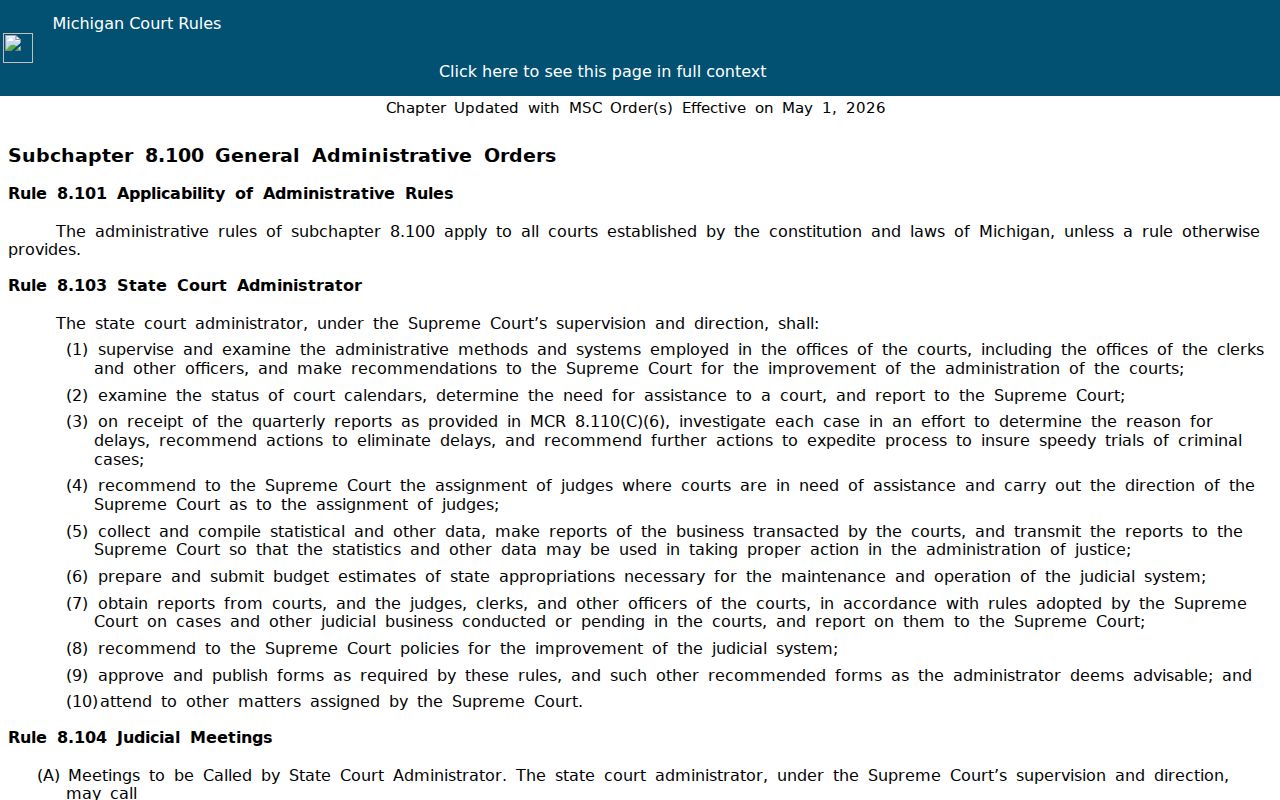
The rule allows inspection and copying of public case records, within its limits. When a document, a court record, or a public-search result needs confirmation, the clerk is the right Gogebic contact.
What a Court Record Contains
A court file is built around its identifying details. The case number, court, case type, party role, filing date, and document title all help staff pull the right Gogebic County record. The docket sheet serves as the chronological index. Its entries cover filings like a complaint or petition, a notice, a proof of service, a motion, an order, a judgment, or a later satisfaction. Read them with care. A filed pleading is only a request or assertion, while a signed order or judgment is the court's actual action and the thing to check when the exact result matters.
| Case number | The complete identifier assigned by the court. Give the full number and court name rather than a shortened browser label. |
|---|---|
| Pleadings | Complaints, petitions, answers, motions, briefs, and other filed requests. A pleading is not a finding of fact. |
| Orders and judgments | Signed court directions or results. Check whether the document is entered, amended, superseded, or subject to appeal. |
| Docket sheet | The case-history index of filings, notices, settings, rulings, and other recorded events. |
| Exhibits and protected data | Attachments can be public, sealed, redacted, or restricted. Do not assume a public case makes every exhibit available. |
Older Gogebic County records may sit in paper files, or their online history may be spotty. Ask the clerk before a counter visit. Can the file be retrieved, can a document be reproduced, and does an authorized requester or a different process apply?
Gogebic Court Record Transcripts
A transcript is its own product. It is typed out separately from what sits in the Gogebic court file. It is not a photocopy. The county's official request form walks you through what the transcriber needs. Expect to list the file number, judge, parties, hearing type, and the hearing date. You also supply your contact details. Say whether the request serves an appeal. Then sign and date it. Getting the court and hearing date right keeps your request from landing with the wrong recorder.
Two certified transcribers appear on the form. For circuit-court work, it lists Tammy Stella, CER 7638, reachable at 906-667-1104 or tstella@gogebic.gov. District-court transcripts go to Deborah MacPherson, CER 9403, at 906-667-1138 or magistrate@gogebic.gov. Those addresses are record-specific. For any other court record or a general file question, start with the court's main contact. Ask the clerk which channel to use.
Expect to prepay or leave a deposit before production starts. The form says the court typically reaches out within 7 to 10 business days. It delivers within 28 days after prepayment. Cancelled requests can still be billed for pages already finished. Treat those timeframes as the form's general expectation, not a promise for every hearing.
Certified Copies and Fees
A plain copy just reproduces the public record. A certified copy carries the court's stamp. A court filing, probate matter, title issue, vital-record correction, or appeal may demand that certification. Say which type you need at the top of your Gogebic request. The county publishes no general price table. There is none for plain copies, certified copies, certification, or record searches. Never borrow a fee from another Michigan court. Ask the clerk the current cost and accepted payment method for your specific document.
| Item | Amount |
|---|---|
| Inspection of an available public case record | No access or retrieval fee under MCR 8.119(J) |
| Plain or certified court-document copy | General Gogebic schedule not published; confirm with the clerk |
| Original transcript page | $3.75 per page, $50 minimum original charge |
| Transcript copy page | $0.90 per page, plus postage and any additional copy charges |
MCR 8.119(J) allows actual reproduction costs plus a court-set standard copy fee. What it bars is a separate charge just to view public case history or pull a document for inspection. Certification, mailing, or a transcript can each add a lawful charge. Get the estimate first if your order is large.
Gogebic Court Records and FOIA
County FOIA and court-record access are two different doors. The Gogebic County FOIA process covers county-government administrative records. It can also point you toward the County Clerk or another county office. A judicial case file belongs with the clerk of the court that holds it, under Michigan Court Rule 8.119. Routing a court-file request through county FOIA changes nothing. It does not alter the judicial access rule, start a filing deadline, or open a sealed record. The official Gogebic County FOIA page posts the county policy, summary, request, and indigency links.
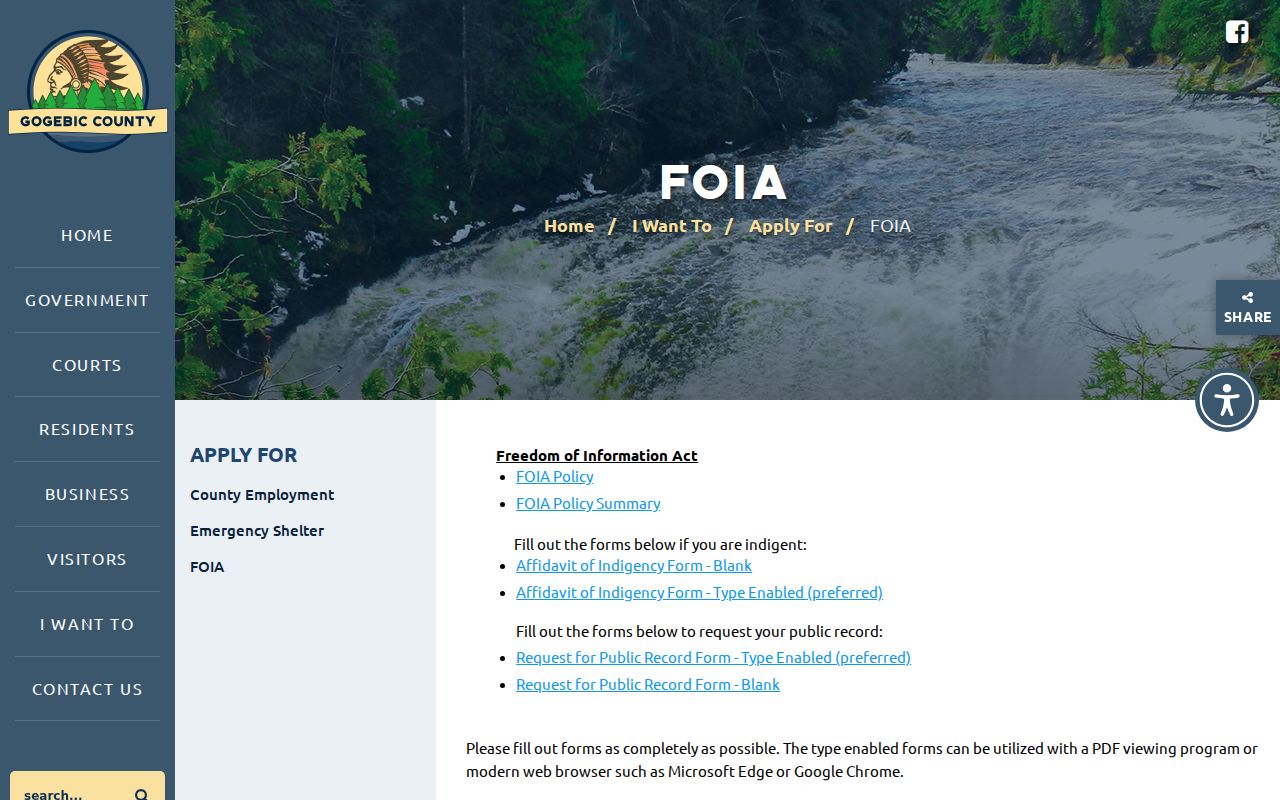
For county administrative records, the FOIA Coordinator is the Gogebic County Clerk, 200 N. Moore, Bessemer, MI 49911, with fax 906-663-4660 and e-mail foia@gogebic.gov. The county form leaves room for a detailed description and lets you pick delivery by inspection, mail, e-mail when available, or pickup. For a Gogebic court record, ask the judicial clerk which route applies.
Public Access and Sealed Records
Michigan Court Rule 8.119 opens public case records to inspection and copying. A rule, statute, or court order can say otherwise. The rule also shields personal identifying information and allows redaction. You do not have to prove a personal stake to inspect an available public record. But public docket access does not license copying restricted data into a request or publication. Protected account numbers, Social Security numbers, medical details, and protected addresses are all off limits. Plenty of documents stay nonpublic. MiCOURT's public-search exclusions cover many juvenile and child-protective proceedings. Adoption, mental illness, name changes, parental waivers, PPO matters, wills, and other protected categories are excluded too. A sealed exhibit can sit inside an otherwise public case too. When a Gogebic clerk reports no public record, that answer speaks to your access only. It reveals nothing about what a protected file may hold. Ask whether a redacted copy or an authorized-request process exists.
Key Rules:
Michigan Court Rule 8.119 governs public trial-court record maintenance, inspection, copying, redaction, and access limits.
MCL 15.231 begins Michigan's FOIA framework for public-body records, including county administrative records.
MCL 15.235 sets the public-body FOIA response framework and does not replace the court clerk's judicial-record process.
Gogebic Court Record Forms
Gogebic County's court-forms index helps you track down named local forms and related court materials. It earns its keep when a notice cites a form by title. The same goes for a clerk's instruction or a record request. Remember what it is not: a public case-file viewer. A form proves nothing about the content or outcome of any particular court record. Pair the case number with the clerk's direction. That is how you match a form to the right matter. The official Gogebic County court-forms page offers categories plus a file-name search control.
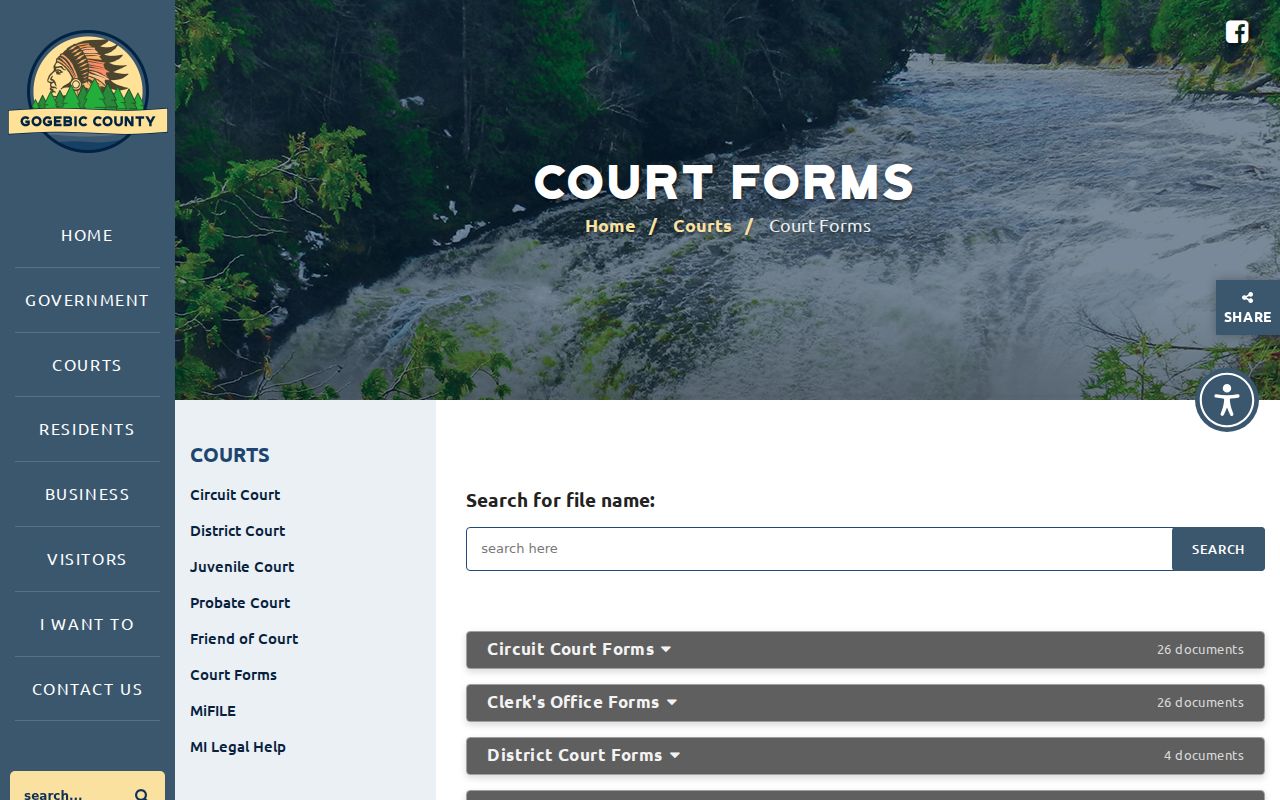
The index tells you what to ask for; the clerk and the case file remain the real sources for a public docket entry, an underlying document, or a certified Gogebic court record. Need the case number first? Use the Gogebic County case search.